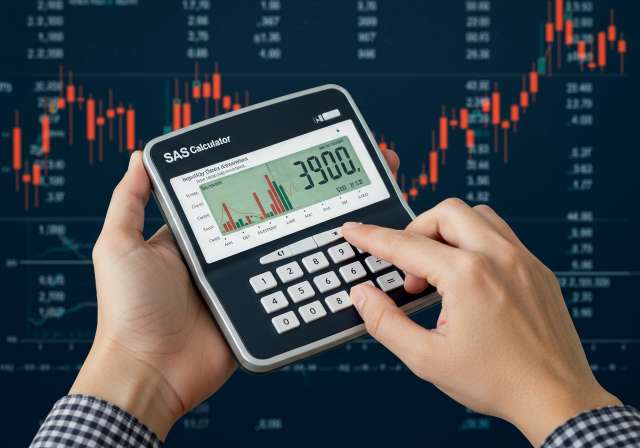

Estimate your investments with an S&P Return Calculator. Analyze historical S&P 500 returns, project future growth, and make informed decisions. Explore index f
Estimate your investments with an S&P Return Calculator. Analyze historical S&P 500 returns, project future growth, and make informed decisions. Explore index fund investing and financial planning for your future.
S&P Returns: Historical Analysis & Future Projection for Indian Investors
Understanding the S&P 500 and its Relevance to Indian Investors
The Standard & Poor’s 500 (S&P 500) is a stock market index that represents the performance of 500 of the largest publicly traded companies in the United States. While it’s a US-based index, understanding its historical performance and potential future projections can be immensely valuable for Indian investors. This is because:
- Global Economic Indicator: The S&P 500 often reflects the overall health of the global economy. Strong performance can signal positive economic trends, while a downturn may indicate potential global recessionary pressures.
- Diversification: Many Indian investors diversify their portfolios by investing in international funds, including those that track the S&P 500. Understanding the index helps them assess the performance of these funds.
- Benchmarking: The S&P 500 can serve as a benchmark for comparing the performance of other investment options.
- Inspiration for Indian Indices: Indian indices like the Nifty 50 are structured similarly to the S&P 500, tracking the performance of leading companies in India. Analyzing the S&P 500’s history can offer insights into potential trends in the Indian equity markets.
Historical S&P 500 Returns: A Look Back in Time
Analyzing the historical returns of the S&P 500 provides valuable context for understanding its volatility and long-term growth potential. Let’s delve into some key historical periods:
Long-Term Average Returns
Historically, the S&P 500 has delivered an average annual return of around 10-12% before inflation. This figure is often cited as a benchmark for long-term equity investments. However, it’s crucial to remember that past performance is not indicative of future results.
Periods of High Growth
The 1990s witnessed significant growth in the S&P 500, driven by the dot-com boom. Similarly, the period following the 2008 financial crisis saw a strong rebound, fueled by quantitative easing and economic recovery. These periods highlight the potential for substantial gains in the equity market.
Periods of Volatility and Downturn
The S&P 500 has also experienced periods of significant volatility and downturn. The dot-com bubble burst in the early 2000s, the 2008 financial crisis, and more recently, the COVID-19 pandemic, all led to sharp declines in the index. These events underscore the importance of risk management and diversification in investment portfolios.
Indian investors should be aware that global events can significantly impact the performance of international investments. Economic downturns in the US, for example, can affect global markets, including India.
Factors Influencing S&P 500 Returns
Several factors can influence the performance of the S&P 500, including:
- Economic Growth: Strong economic growth typically leads to higher corporate earnings and increased investor confidence, driving up stock prices.
- Interest Rates: Changes in interest rates can impact borrowing costs for companies and influence investor sentiment. Lower interest rates generally make stocks more attractive compared to bonds.
- Inflation: High inflation can erode corporate profits and decrease consumer spending, potentially leading to lower stock prices.
- Geopolitical Events: Global events, such as political instability, trade wars, and pandemics, can create uncertainty and volatility in the market.
- Technological Advancements: Disruptive technologies can create new opportunities and challenges for businesses, impacting the performance of individual stocks and the overall index.
- Investor Sentiment: Market sentiment, driven by fear and greed, can significantly influence stock prices in the short term.
Projecting Future S&P 500 Returns: Challenges and Considerations
Predicting the future performance of the S&P 500 is inherently challenging. Market conditions are constantly evolving, and unforeseen events can significantly impact returns. However, we can consider some factors and methodologies for making reasonable projections:
Economic Outlook
Analyzing the current economic outlook, including GDP growth forecasts, inflation expectations, and interest rate policies, can provide insights into potential future returns. A positive economic outlook generally supports higher stock prices.
Earnings Growth
Projecting the future earnings growth of companies within the S&P 500 is crucial. Earnings growth is a primary driver of stock prices. Analysts’ estimates and industry trends can be helpful in forecasting earnings growth.
Valuation Metrics
Valuation metrics, such as the price-to-earnings (P/E) ratio, can provide insights into whether the market is overvalued or undervalued. High P/E ratios may suggest that the market is overvalued and could be prone to correction.
Using Historical Data
While past performance is not a guarantee of future results, analyzing historical data can provide a range of potential outcomes. Statistical models and simulations can be used to project future returns based on historical trends and volatility.
How Indian Investors Can Use S&P 500 Insights
Indian investors can leverage insights from the S&P 500 in several ways:
- Diversification: Investing in international funds that track the S&P 500 can provide diversification benefits to an Indian investor’s portfolio. This can help reduce overall portfolio risk.
- Benchmarking: The S&P 500 can serve as a benchmark for evaluating the performance of other investment options, including Indian equity mutual funds.
- Understanding Global Trends: Monitoring the S&P 500 can provide insights into global economic trends and potential impacts on the Indian economy.
- Making Informed Decisions: By understanding the historical performance and potential future projections of the S&P 500, Indian investors can make more informed investment decisions.
Investment Options for Indian Investors to Access S&P 500 Returns
While direct investment in the S&P 500 is not feasible for Indian investors, several investment options provide exposure to the index:
- International Mutual Funds: Many Indian mutual funds invest in global equities, including those that track the S&P 500. These funds offer a convenient way to diversify into international markets.
- Exchange Traded Funds (ETFs): ETFs that track the S&P 500 are available in some international markets and can be accessed through global brokerage accounts.
- Feeder Funds: Some Indian mutual funds act as feeder funds, investing in overseas funds that track the S&P 500.
Risk Management and Considerations for Indian Investors
Investing in international markets involves certain risks that Indian investors should be aware of:
- Currency Risk: Fluctuations in exchange rates can impact the returns on international investments. A weakening Indian Rupee (₹) can increase returns, while a strengthening Rupee can decrease returns.
- Political Risk: Political instability and policy changes in the US can impact the performance of the S&P 500.
- Regulatory Risk: Changes in regulations in the US or India can affect the taxation and accessibility of international investments.
- Taxation: International investments are subject to different tax rules. Consult with a tax advisor to understand the tax implications of investing in the S&P 500.
Final Thoughts
Understanding the historical performance and potential future projections of the S&P 500 can be valuable for Indian investors seeking to diversify their portfolios and gain exposure to global markets. While predicting the future is impossible, analyzing historical data, economic trends, and valuation metrics can provide insights for making informed investment decisions. Remember to consider the risks involved and consult with a financial advisor before making any investment decisions. A basic s p return calculator can help visualize potential outcomes, but should be used as a tool for basic understanding, not as a guaranteed future predictor.



Leave a Reply