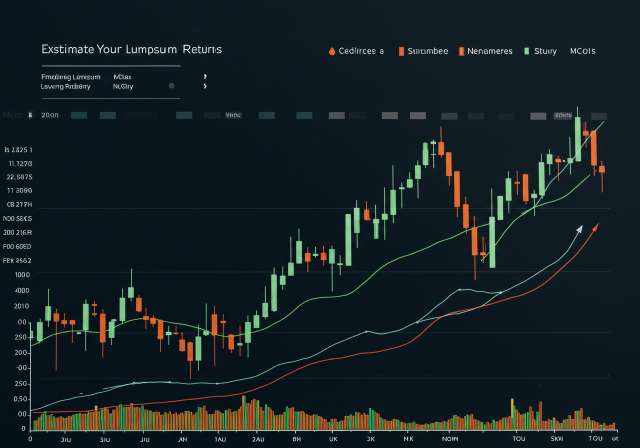

Estimate your future wealth with a growth investment calculator! Plan your investments in equity markets, mutual funds, SIPs & more. Secure your financial futur
Estimate your future wealth with a growth investment calculator! Plan your investments in equity markets, mutual funds, SIPs & more. Secure your financial future. Try it now!
Growth Investment Calculator: Projecting Your Financial Future
Introduction: Investing for Growth in the Indian Market
In India, navigating the world of investments can feel like traversing a vibrant, bustling marketplace. With opportunities ranging from the established Bombay Stock Exchange (BSE) to the innovative fintech platforms, understanding how to project your potential returns is crucial. Whether you’re a seasoned investor actively trading on the National Stock Exchange (NSE) or a novice exploring Systematic Investment Plans (SIPs), a clear understanding of growth potential is paramount. This article delves into the importance of projecting future returns and the various tools and strategies available to Indian investors.
Why Projecting Future Returns Matters
Forecasting your investment’s potential isn’t about predicting the future with absolute certainty. Rather, it’s about making informed decisions based on sound principles and realistic expectations. Here’s why it’s crucial:
- Goal Setting: Clearly defined financial goals, such as retirement planning, children’s education, or purchasing a home, require a realistic projection of the returns needed to achieve them. For instance, estimating the corpus required for your child’s overseas education in 15 years necessitates projecting how much your investments, perhaps a combination of mutual funds and equity, need to grow annually.
- Risk Assessment: Different investment options come with varying degrees of risk. Projecting returns helps you assess whether the potential reward justifies the risk involved. High-growth stocks, for example, might offer substantial returns, but they also carry a higher risk of capital loss compared to more stable investments like government bonds or Public Provident Fund (PPF).
- Portfolio Optimization: By projecting the returns of different assets, you can strategically allocate your investments to create a well-diversified portfolio that aligns with your risk tolerance and financial goals. A balanced portfolio might include a mix of equity mutual funds, debt instruments like corporate bonds, and potentially even alternative investments, all strategically chosen based on their projected growth potential.
- Regular Monitoring and Adjustments: Projections aren’t set in stone. Regularly reviewing your investments and comparing actual performance against projected returns allows you to make necessary adjustments to your investment strategy. For example, if your equity investments underperform your initial projections, you might consider rebalancing your portfolio by adding more debt instruments or shifting to different equity funds.
Understanding Investment Options in India
Before diving into how to project returns, it’s essential to understand the diverse range of investment options available to Indian investors:
- Equity Markets: Investing directly in stocks listed on the NSE and BSE can offer high growth potential but also carries significant risk. Understanding fundamental analysis and market trends is crucial for successful equity investing.
- Mutual Funds: A popular choice for Indian investors, mutual funds pool money from multiple investors to invest in a diversified portfolio of stocks, bonds, or other assets. They are managed by professional fund managers and offer various schemes to suit different risk profiles and investment goals.
- Systematic Investment Plans (SIPs): SIPs allow you to invest a fixed amount regularly, typically monthly, in a mutual fund scheme. This disciplined approach helps average out the cost of investment and benefit from rupee-cost averaging, mitigating the impact of market volatility.
- Debt Instruments: These include government bonds, corporate bonds, and fixed deposits, which offer relatively lower returns but are generally considered less risky than equity investments.
- Public Provident Fund (PPF): A government-backed savings scheme offering tax benefits and a fixed interest rate, making it a popular choice for long-term retirement planning.
- National Pension System (NPS): A retirement savings scheme that allows you to invest in a mix of equity, debt, and government securities. It offers tax benefits and is regulated by the Pension Fund Regulatory and Development Authority (PFRDA).
- Equity Linked Savings Scheme (ELSS): These are equity mutual funds that offer tax benefits under Section 80C of the Income Tax Act. They have a lock-in period of three years, making them suitable for long-term investment.
Factors Influencing Investment Returns
Projecting future returns requires considering various factors that can influence investment performance:
- Market Conditions: Economic growth, inflation, interest rates, and geopolitical events can all impact market sentiment and influence investment returns.
- Company Performance: For equity investments, the financial health, management quality, and growth prospects of the underlying companies are crucial determinants of returns.
- Fund Manager Expertise: For mutual funds, the fund manager’s investment strategy, track record, and ability to generate alpha (excess returns) play a significant role.
- Inflation: The real return on investment is the return after accounting for inflation. It’s essential to consider inflation when projecting future returns to ensure your investments maintain their purchasing power.
- Expense Ratio: For mutual funds, the expense ratio (the annual fee charged by the fund) can impact your overall returns. Lower expense ratios generally translate to higher returns for investors.
- Taxation: Taxes on investment gains can significantly reduce your overall returns. Understanding the tax implications of different investment options is crucial for accurate projections.
Methods for Projecting Future Returns
Several methods can be used to project future investment returns, each with its own strengths and limitations:
- Historical Data Analysis: Analyzing past performance can provide insights into potential future returns. However, it’s crucial to remember that past performance is not necessarily indicative of future results. This approach is most useful when combined with other methods.
- Average Annual Return: Calculating the average annual return of an investment over a specific period can provide a simple estimate of future returns. However, this method doesn’t account for volatility or the sequence of returns.
- Compounded Annual Growth Rate (CAGR): CAGR provides a more accurate measure of the average annual growth rate of an investment over a specific period, taking into account the effects of compounding. This is often used to evaluate mutual fund performance.
- Monte Carlo Simulation: This sophisticated technique uses random sampling to simulate a range of possible future outcomes based on historical data and statistical distributions. It provides a more comprehensive view of potential returns and the associated risks.
- Expert Opinions and Financial Models: Financial analysts and economists often publish forecasts and projections for different asset classes. These can be valuable inputs for your own projections, but it’s essential to consider the assumptions and biases underlying these forecasts.
Utilizing a Growth Investment Calculator
A useful tool for projecting the potential growth of your investments is a growth investment calculator. These calculators typically require you to input the initial investment amount, the expected rate of return, and the investment time horizon. The calculator then estimates the future value of your investment based on these inputs. While these calculators provide a valuable starting point, remember that the results are only estimates and should not be considered guarantees of future performance.
Steps to Project Future Investment Returns
Here’s a step-by-step guide to projecting future investment returns:
- Define Your Financial Goals: Clearly identify your financial goals, such as retirement, education, or purchasing a home. Determine the amount of money you need to achieve each goal and the timeframe for achieving it.
- Assess Your Risk Tolerance: Determine your comfort level with risk. This will help you choose investment options that align with your risk profile.
- Choose Your Investment Options: Select the investment options that align with your financial goals and risk tolerance. Consider diversifying your portfolio across different asset classes.
- Estimate the Expected Rate of Return: Research the historical performance of your chosen investment options and consider expert opinions and financial models to estimate the expected rate of return. Be realistic and conservative in your projections.
- Consider Inflation: Adjust your projected returns for inflation to estimate the real return on investment.
- Factor in Taxes and Expenses: Account for taxes on investment gains and expenses such as expense ratios for mutual funds.
- Use a Growth Investment Calculator: Input your investment details into a growth investment calculator to estimate the future value of your investments.
- Monitor and Adjust: Regularly monitor your investments and compare actual performance against projected returns. Make necessary adjustments to your investment strategy as needed.
The Role of SEBI in Investor Protection
The Securities and Exchange Board of India (SEBI) plays a crucial role in regulating the Indian financial market and protecting the interests of investors. SEBI sets rules and regulations for market participants, including stock exchanges, mutual funds, and brokers, to ensure fair and transparent trading practices. SEBI also conducts investor awareness programs to educate investors about different investment options and the risks involved.
Conclusion: Planning for a Secure Financial Future
Projecting future investment returns is an essential step in planning for a secure financial future. By understanding the different investment options available in India, considering the factors that influence returns, and utilizing the tools and methods discussed in this article, you can make informed investment decisions that align with your financial goals and risk tolerance. Remember that projections are estimates and should be regularly reviewed and adjusted as needed. With careful planning and disciplined investing, you can increase your chances of achieving your financial aspirations.



Leave a Reply