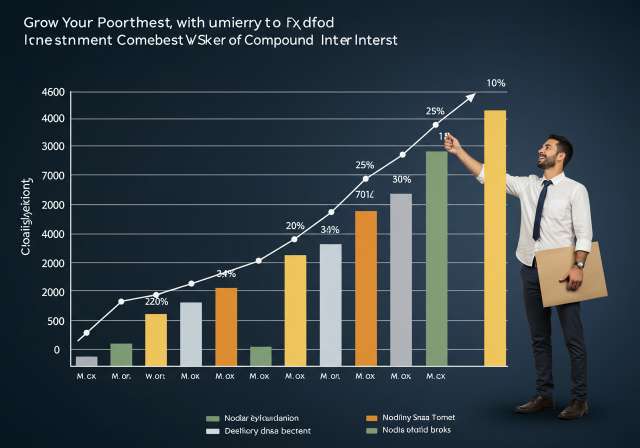
Plan your financial future with ease! Our SIP calculator helps you estimate returns on your Systematic Investment Plan. Start smart, invest wisely. Use our SIP
Plan your financial future with ease! Our SIP calculator helps you estimate returns on your Systematic Investment Plan. Start smart, invest wisely. Use our SIP calculator & check your potential wealth today!
SIP Calculator: Plan Your Investments for a Secure Future
Introduction: Demystifying SIPs and Their Power
In the dynamic world of investments, navigating the various options can feel overwhelming. One investment strategy, however, stands out for its simplicity and effectiveness: the Systematic Investment Plan, or SIP. SIPs have gained immense popularity among Indian investors, particularly those new to the equity markets, for their disciplined approach and the power of compounding.
Think of a SIP as a recurring deposit, but instead of depositing money in a bank, you’re investing in mutual funds. You commit to investing a fixed amount regularly – weekly, monthly, or quarterly – into a chosen mutual fund scheme. This systematic approach allows you to average out the cost of your investment, mitigating the risk associated with market volatility. This is known as rupee cost averaging.
The beauty of a SIP lies in its accessibility. With investment options starting as low as ₹500 per month, it democratizes investing, making it accessible to individuals from all walks of life. The disciplined nature of SIPs also encourages a savings habit, fostering financial responsibility.
Understanding the SIP Calculator: Your Financial Planning Tool
While the concept of a SIP is straightforward, estimating the potential returns on your investment can be a bit tricky. This is where the SIP calculator comes in handy. A SIP calculator is a simple yet powerful online tool that helps you estimate the potential returns on your SIP investments over a specific period, based on certain assumptions.
The typical inputs required for a SIP calculator are:
- Monthly Investment Amount: The amount you plan to invest each month (e.g., ₹5,000).
- Investment Tenure: The period for which you plan to invest (e.g., 10 years).
- Expected Rate of Return: An estimated annual rate of return on your investment. This is where some research is required. While past performance is not indicative of future results, you can use historical returns of similar mutual funds as a guideline.
Based on these inputs, the SIP calculator projects the potential maturity value of your investment. It’s important to remember that this is just an estimate, and the actual returns may vary depending on market conditions.
Why Use a SIP Calculator?
Here are some key reasons why a SIP calculator is an essential tool for any investor:
- Financial Goal Planning: It helps you determine the monthly investment amount required to reach your financial goals, such as retirement planning, children’s education, or buying a house.
- Investment Strategy Optimization: You can experiment with different investment amounts and tenures to see how they impact your potential returns.
- Understanding Compounding: The SIP calculator visually demonstrates the power of compounding, showcasing how your investments grow exponentially over time.
- Risk Assessment: By comparing different scenarios with varying rates of return, you can get a sense of the potential risks and rewards associated with your SIP investments.
Beyond the Calculator: Factors Influencing Your SIP Returns
While the SIP calculator provides a valuable estimate, it’s crucial to understand the factors that can influence your actual returns:
- Market Volatility: Equity markets are inherently volatile, and your SIP returns will be affected by market fluctuations. The benefit of SIPs, however, is that they help you navigate volatility through rupee cost averaging.
- Fund Performance: The performance of the mutual fund scheme you choose will directly impact your returns. Researching different funds and their past performance is essential.
- Expense Ratio: Mutual funds charge an expense ratio, which is a fee for managing the fund. A higher expense ratio can reduce your returns.
- Taxation: SIP investments in equity mutual funds are subject to capital gains tax. Short-term capital gains (held for less than 12 months) are taxed at 15%, while long-term capital gains (held for more than 12 months) are taxed at 10% (above ₹1 lakh).
Types of Mutual Funds Suitable for SIP Investments
The Indian mutual fund market offers a wide array of schemes suitable for SIP investments. Here are a few popular categories:
- Equity Funds: These funds invest primarily in equity stocks and offer the potential for high returns but also carry higher risk. Examples include large-cap funds, mid-cap funds, small-cap funds, and sectoral funds.
- Debt Funds: These funds invest primarily in debt instruments like government bonds and corporate bonds. They offer lower risk but also lower potential returns compared to equity funds.
- Hybrid Funds: These funds invest in a mix of equity and debt instruments, offering a balance between risk and return.
- ELSS (Equity Linked Savings Scheme) Funds: These are equity funds that offer tax benefits under Section 80C of the Income Tax Act, allowing you to deduct up to ₹1.5 lakh from your taxable income. They come with a lock-in period of 3 years.
Choosing the Right Mutual Fund for Your SIP
Selecting the right mutual fund scheme for your SIP is crucial. Consider the following factors:
- Risk Tolerance: Assess your risk appetite and choose a fund category that aligns with it. If you are risk-averse, consider debt funds or hybrid funds. If you are comfortable with higher risk, equity funds may be suitable.
- Investment Horizon: The length of your investment horizon should also influence your fund selection. For long-term goals (e.g., retirement), equity funds may be more appropriate. For short-term goals (e.g., buying a car), debt funds or hybrid funds may be a better choice.
- Fund Manager’s Expertise: Research the fund manager’s track record and experience.
- Expense Ratio: Compare the expense ratios of different funds within the same category and choose a fund with a reasonable expense ratio.
- Fund’s Past Performance: While past performance is not indicative of future results, it can provide some insights into the fund’s performance over time.
Starting Your SIP: A Step-by-Step Guide
Starting a SIP is a simple and straightforward process. You can invest through:
- Online Platforms: Many online platforms, such as Groww, Zerodha Coin, and Paytm Money, allow you to invest in mutual funds directly.
- Mutual Fund Distributors: You can also invest through mutual fund distributors or advisors.
- Directly with the AMC (Asset Management Company): You can invest directly with the AMC of the mutual fund you wish to invest in.
Here’s a general guide to starting your SIP:
- Choose a Mutual Fund: Research and select a mutual fund scheme that aligns with your investment goals and risk tolerance.
- Complete KYC (Know Your Customer): You need to complete KYC verification before you can invest in mutual funds. This involves providing your personal and financial details and submitting relevant documents.
- Select SIP Amount and Frequency: Decide on the amount you want to invest each month and the frequency of your investments (e.g., monthly, quarterly).
- Set up Auto-Debit: Set up an auto-debit mandate from your bank account to ensure that your SIP investments are made automatically each month.
- Monitor Your Investments: Regularly monitor the performance of your SIP investments and make adjustments as needed.
SIP vs. Lump Sum Investment: Which is Right for You?
Another common investment strategy is lump sum investment, where you invest a large sum of money at once. SIP and lump sum investments have their own advantages and disadvantages. SIPs are generally considered more suitable for beginners and those who prefer a disciplined approach to investing. Lump sum investments can potentially generate higher returns if the market performs well, but they also carry higher risk.
Ultimately, the best approach depends on your individual circumstances, risk tolerance, and investment goals. You can even consider a hybrid approach, combining SIPs with occasional lump sum investments when you have extra cash available.
Beyond Equity: SIPs in Debt and Gold
While SIPs are most commonly associated with equity mutual funds, they can also be used to invest in debt and gold. SIPs in debt funds offer a more conservative approach to investing and are suitable for risk-averse investors. SIPs in gold funds or gold ETFs allow you to accumulate gold in a systematic manner, hedging against inflation and market volatility.
By diversifying your SIP investments across different asset classes, you can further reduce your overall risk and potentially enhance your returns.
Conclusion: Start Your SIP Journey Today!
SIPs are a powerful tool for building wealth over time. By investing regularly and systematically, you can take advantage of the power of compounding and achieve your financial goals. Use a SIP calculator to estimate your potential returns, research different mutual fund schemes, and start your SIP journey today! Remember that even small, consistent investments can make a big difference in the long run.
Investing in SIPs is a long-term game. Don’t be discouraged by short-term market fluctuations. Stay disciplined, stay invested, and let the power of compounding work its magic. Regular monitoring and adjustments to your portfolio, along with a thorough sip check of your investment goals, will help you stay on track.
Disclaimer: Mutual fund investments are subject to market risks. Read all scheme related documents carefully before investing. Past performance is not indicative of future results. Consult with a financial advisor before making any investment decisions.



Leave a Reply